
News
Stay up to date on the latest crypto trends with our expert, in-depth coverage.

1Bitget Daily Digest (Jan.16)|CME to Launch ADA, LINK and XLM Futures on Feb 9; Bitmine Purchases 24,068 ETH; Polygon Lays Off 30% to Pivot Toward Stablecoin Payments2Atomic Wallet raises red flags in viral $479k Monero loss claim3Bitcoin Sheds 30% of Open Interest: Is a Rebound Imminent?

Crypto Scam? Trove Raises $11.5M, Then Drops Hyperliquid Plans for Solana Launch
CoinEdition·2026/01/19 06:42
Vitalik Warns Ethereum Risks From Growing Protocol Complexity
Cryptotale·2026/01/19 06:36
Counterpoint: Apple iPhone shipments surge 28%, leading the Chinese market
格隆汇·2026/01/19 06:28
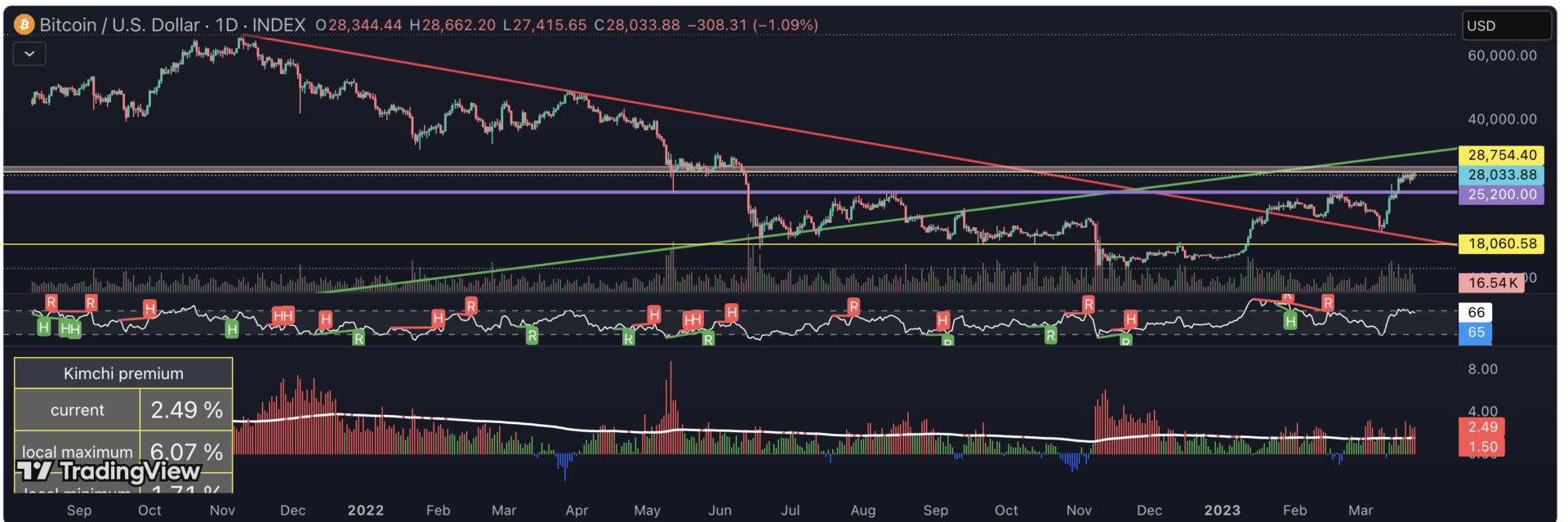
South Korea’s won falls to Asia’s worst performer as kimchi premium turns bullish
Cointelegraph·2026/01/19 05:54
EUR/USD gains above 1.1600 as Europe pushes back on Trump’s tariff threat
101 finance·2026/01/19 05:15
Micron Describes AI-Fueled Demand for Memory as ‘Unmatched’
101 finance·2026/01/19 05:03
Implementing the SNB's Monetary Policy
101 finance·2026/01/19 05:00
Flash
06:42
Opinion: Ethereum must hold the $3,085 level to maintain its upward trendBlockBeats News, January 19, according to analyst @alicharts, in the past two weeks, the number of daily active addresses on Ethereum has doubled, exceeding 800,000, indicating a renewed increase in network participation. Recently, the most concentrated buying range for Ethereum ETF has been between $3,119 and $2,772, making this range a key support area. From a technical perspective, Ethereum continues to consolidate within a triangle on the daily chart. As long as the price remains above the support level of $3,085, a breakout above the resistance at $3,400 could trigger a move toward $3,660, and potentially even further up to $4,000.
06:41
View: Ethereum Must Hold $3085 Level to Sustain UptrendBlockBeats News, January 19th, according to analyst @alicharts, in the past two weeks, the daily active addresses on Ethereum have doubled, exceeding 800,000, indicating a renewed network participation. The most concentrated range for Ethereum ETF buy orders recently is between $3,119 and $2,772, making this range a key support area.
From a technical perspective, Ethereum continues to consolidate within a triangle on the daily chart. As long as the price remains above the support level of $3,085, a breakthrough of the resistance level at $3,400 could trigger a move towards $3,660, and possibly even further to $4,000.
06:37
「On-chain Gold Maximalist」 places a long position order to open a long Silver contract at a limit price of $84BlockBeats News, January 19th, according to Hyperinsight monitoring, the "Largest Long on-chain Gold" trader (0x89453) placed a buy order to open a long position on a silver contract at a limit price of $84, with a position size of 100,000 ounces.
Currently, the address is still long 1,500 PAX Gold (PAXG) tokens with 5x leverage, with an average entry price of $4,415.46, unrealized profit of $400,000, and is also heavily leveraged long on a basket of on-chain US stock tokens, including Apple, Intel, Oracle, Micron Technology, AMD, and Palantir.
News